Sweater Weather at the Borderview Research Farm
This September, we at the Borderview Research Farm saw a new kind of fruit of our labors. More than a year in the making, three sweater vests are the latest products to be gleaned from the farm fields, and this is their story.
For years, it has been a goal of Dr. Heather Darby and NWCS team member Laura Sullivan to produce clothing from the trial fields. Heather and team have been trialing hemp for research since 2016, and have honed their skills for growing the crop for several different applications from food, to flower, to biomass. Unquestionably, it was not a lack of agronomic knowledge that made this project challenging, but instead gaping holes in the regional and domestic textile supply chain that currently serve to sever those producing raw materials from the mills that convert them into value added products.
The work began last May in 2024 with the planting of the hemp trials. Always eager to pack as much learning as we can into a season, we opted to pepper this one with a few more novel experiments. The growing season went on like any other, until October came. While the rest of the fields were tucked in for the season under their cover crops, one hemp trial stayed standing to weather the Winter. Retting is a process that all bast fiber plants must undergo to liberate the fiber from the inner woody core of the stalk, and will occur under a variety of conditions. In the case of winter retting, the undulation of the temperature fluctuating between freeze and thaw works to mechanically release the fiber from the natural glues in the stalk. This trial represented the first time that a winter-retting study had been conducted in the Northeast, and the experimental design involved harvesting fiber hemp stalks at one-month intervals from December 2024 to April 2025. Upon each harvest timing, sampled material was photo- documented and subject to physical and chemical analysis. An electron microscope was also utilized to observe changes in fiber composition at the cellular level.
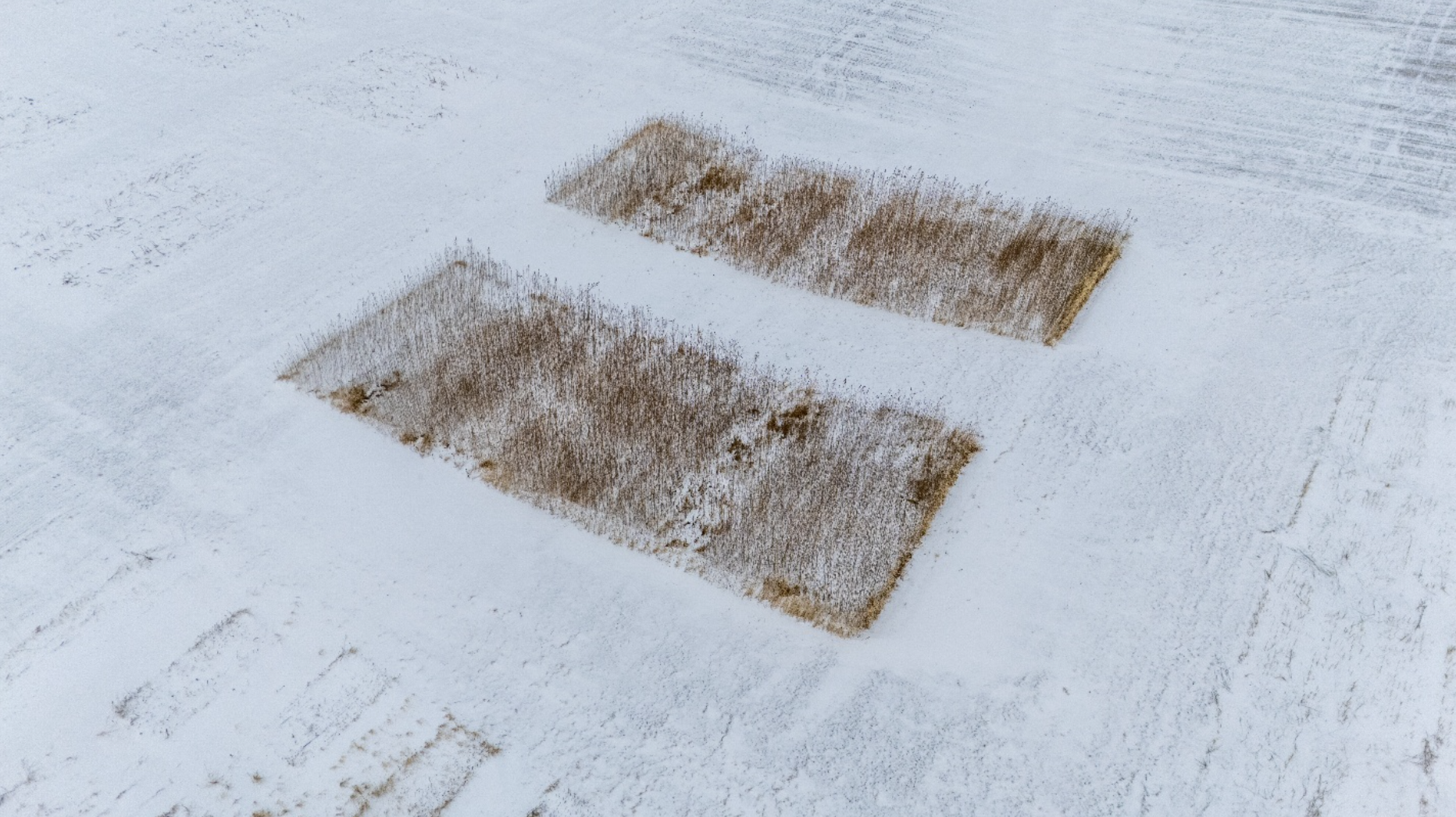
A hemp fiber withstands the cold on a winter’s day. Photo by Andrew Chamberlin
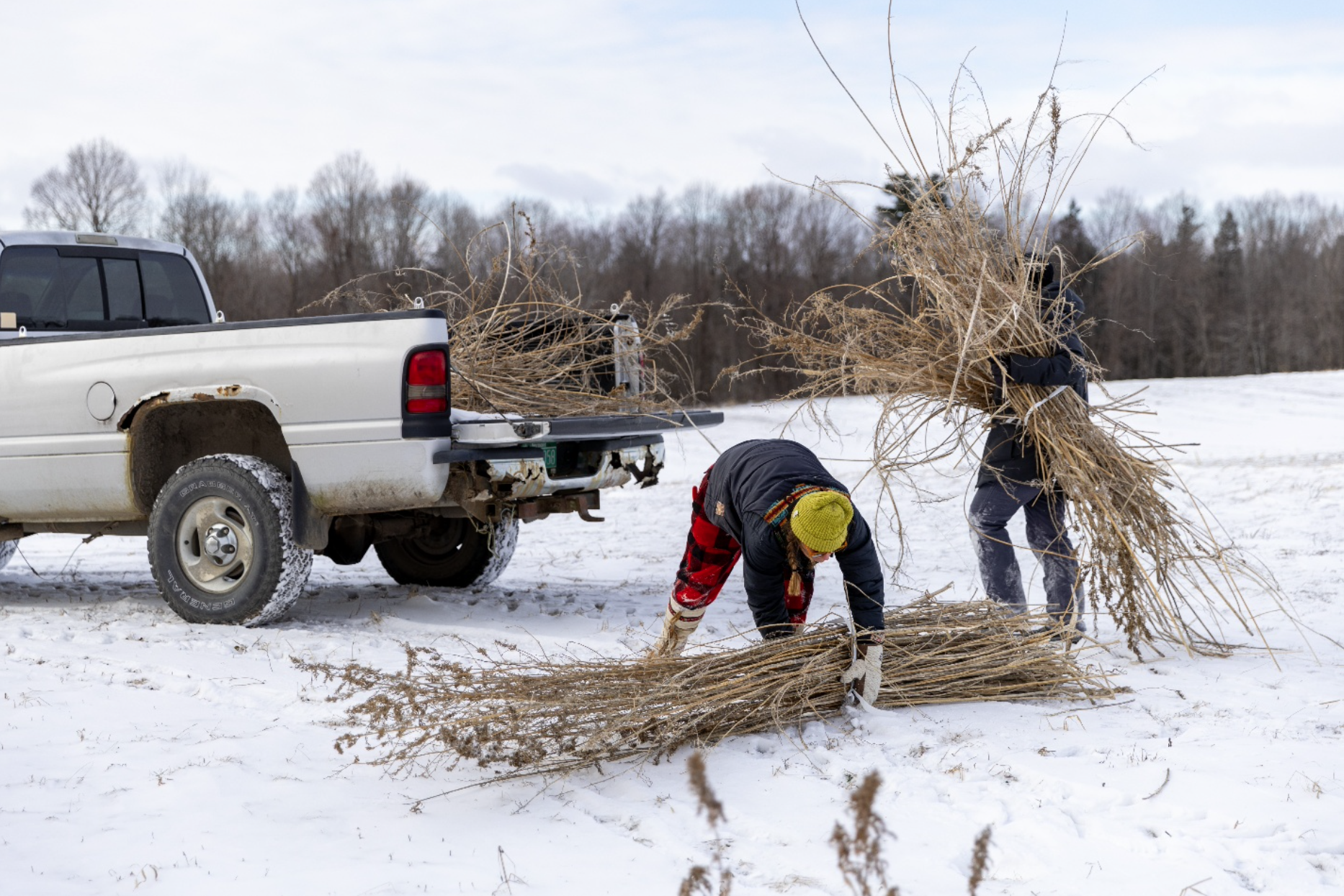
Laura Sullivan and Shannon MacDonald collect fiber samples at one-month intervals throughout the winter to assess the progression of the winter retting process. Photo by Andrew Chamberlin
After the fieldwork and data collection were complete in mid-April, it was time to process the fiber. In an ideal world, this is the moment where we, the farmers, would deliver our raw material to our local scutching mill ahead of spinning. There, they would perform a three-step process turning stalks into spinnable fiber, with hurd (that woody core I was telling you about) as a value-added byproduct of the process. Unfortunately for us, no such mill currently exists in the United States, and so we became one ourselves.
After drying, the stalks were decorticated one by one using a small decorticator from Formation Ag. This is the first step in the process which crushes the stalk and shakes loose much of the hurd material from the inside, while the flexible bast fibers emerge unscathed. The broken fiber was then beaten by hand with a simple wooden knife- at least one hundred years old- to remove any lingering hurd in a middle step called “scutching”. For the last step in the process, we purchased a mechanized hackler from our partners at Taproot Fibrelab in Nova Scotia to comb the scutched fiber bundles into fine spinnable fibers. This step is called hackling, and this purchase was also made possible through the funding of the USDA Sungrant.
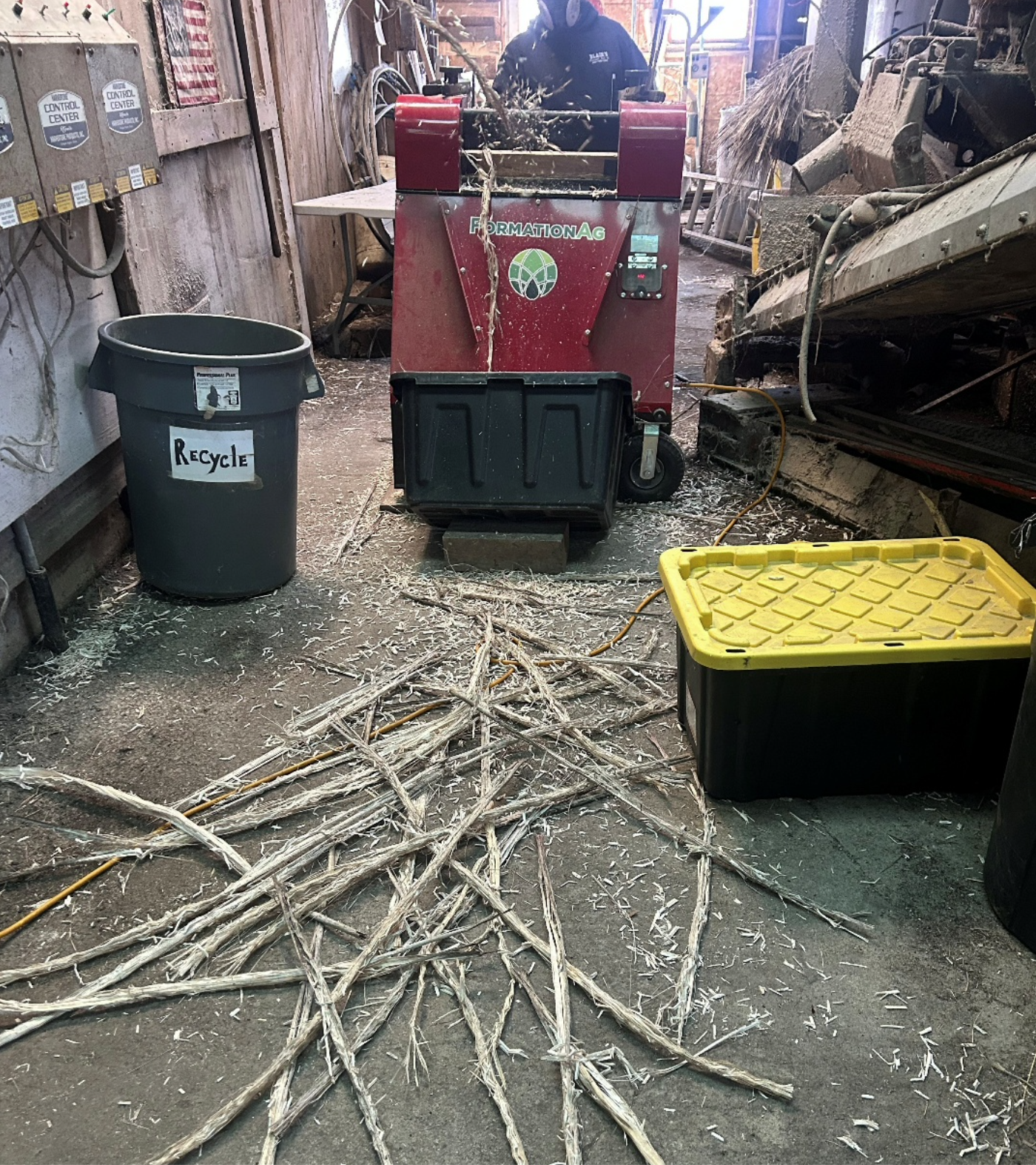
Farmhand Travis Driver decorticating fiber hemp stalks using a formation Ag decorticator. Photo by Laura Sullivan
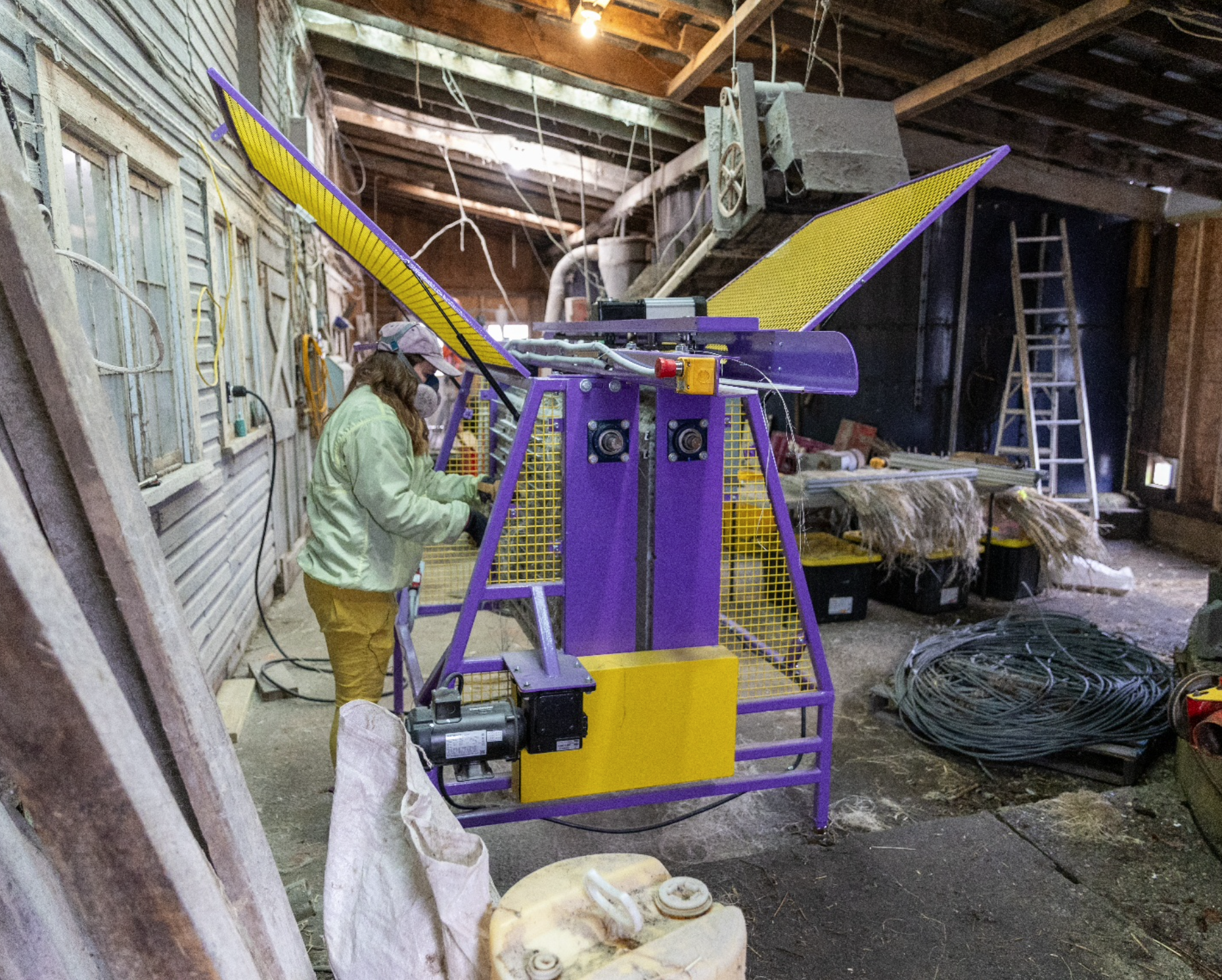
Laura Sullivan Running the Hackler. Photo by Andrew Chamberlin
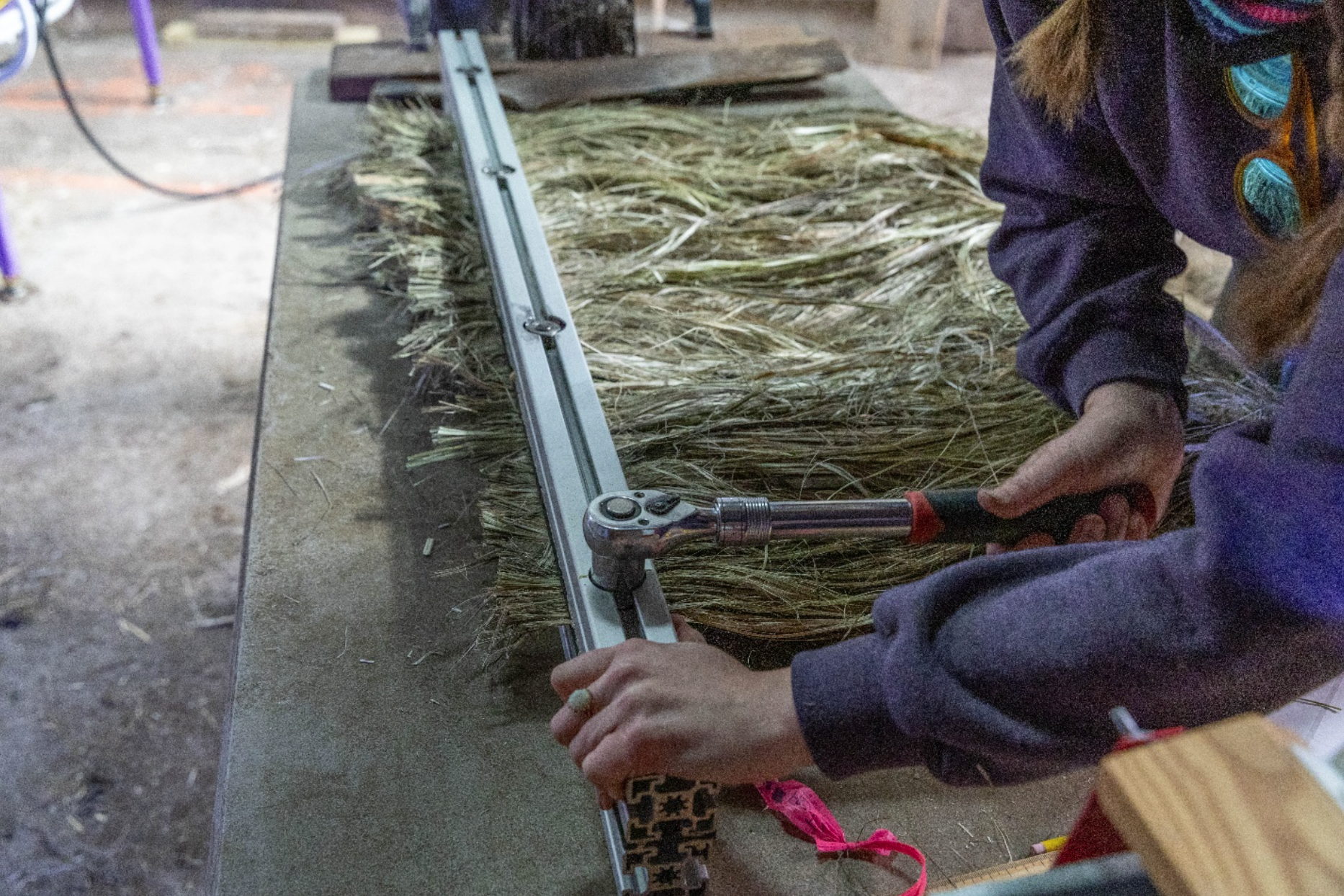
Scutched fiber secured with a clamp will ride a track through the hackler where it will be combed by small metal pins on a conveyor belt. Photo by Andrew Chamberlin
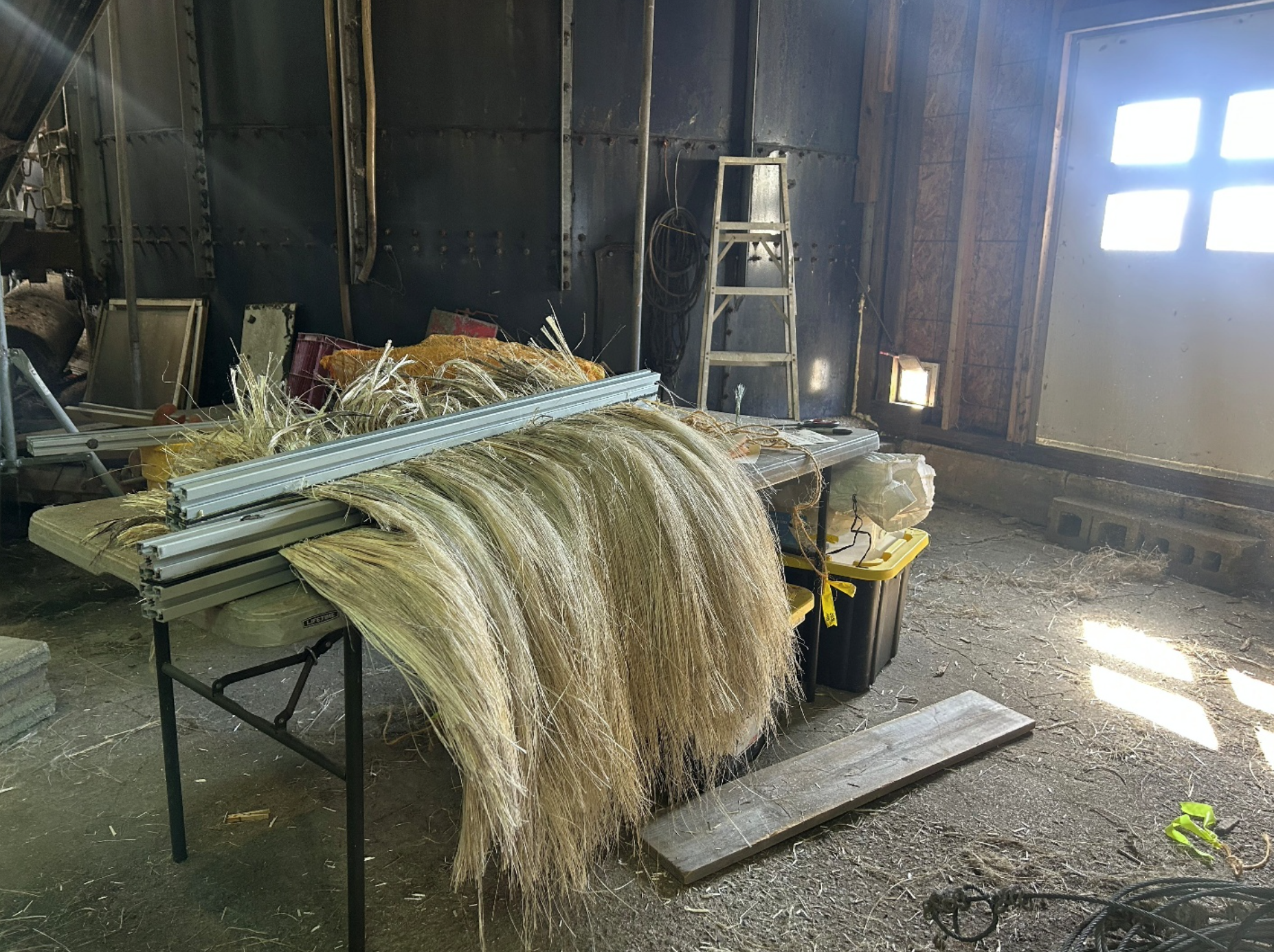
Long line hemp fiber that has emerged from the hackler. Photo by Laura Sullivan
Back in the ideal world, after moving through the scutching mill, our long line fiber would be taken to the local wet-spinning mill to be spun into a 100% hemp yarn. Unfortunately for us, there is no wet-spinning mill in the entire western hemisphere, and if you want to commercially produce a hemp yarn in the US, you have to blend it with cotton or wool. This is because our existing domestic spinning infrastructure is geared towards these shorter staple-length fibers, which cannot manage a fiber like hemp, with regular lengths of 1m or greater. Therefore, there would still be two more steps to perform in order to suit our regional manufacturing capabilities.
The “woolenizing” process went as follows: We cut the long fiber to 6inch lengths, and carded it rigorously three times over with a hand crank carding machine. The purpose of this was to retrofit the hemp fiber to behave more like a wool fiber, and the whole team did their part. Sixteen pounds of woolenized fiber later, it was finally time to let someone else do the work.
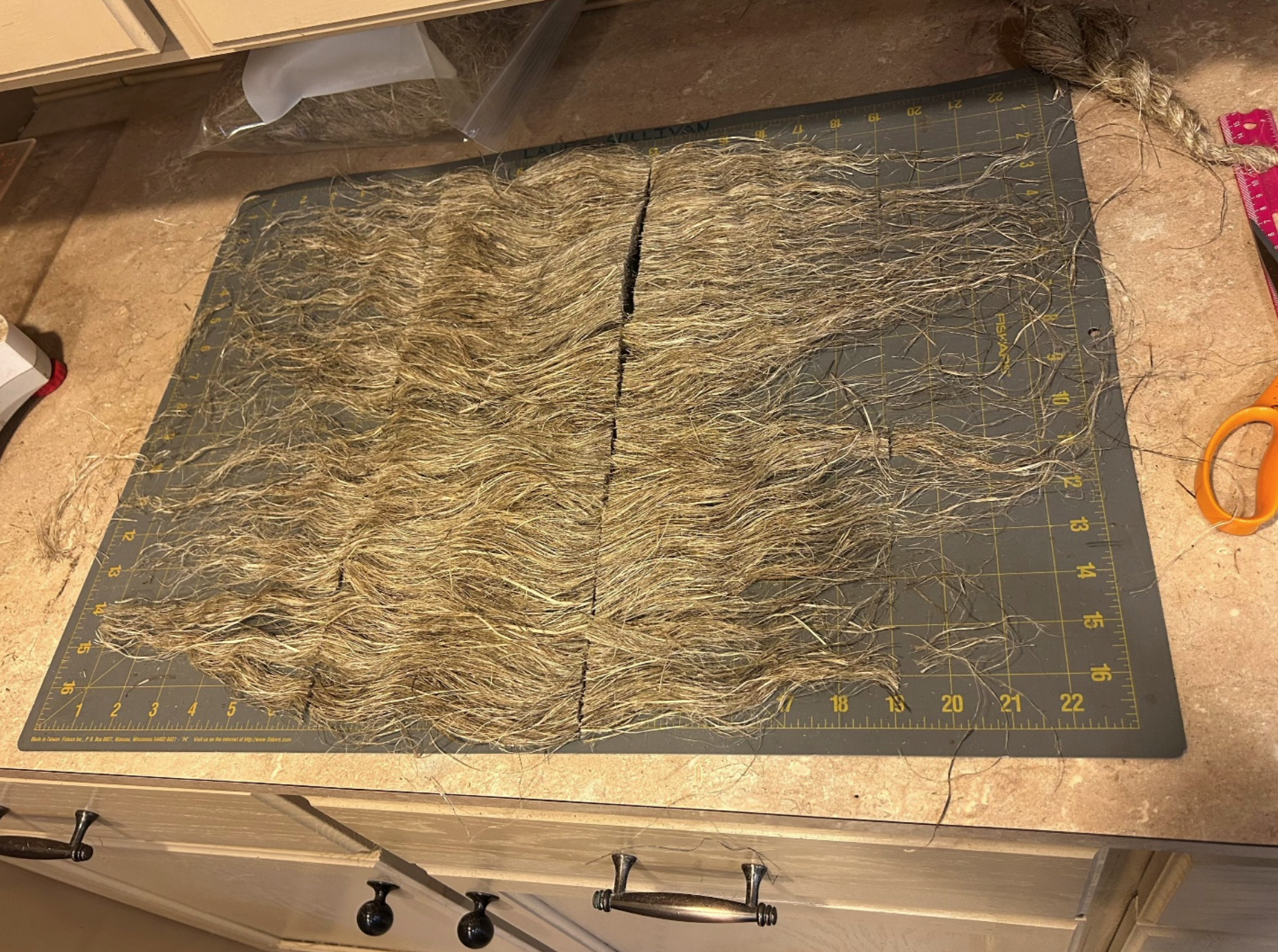
Long fiber was cut to six inch lengths ahead of carding. Photo by Laura Sullivan
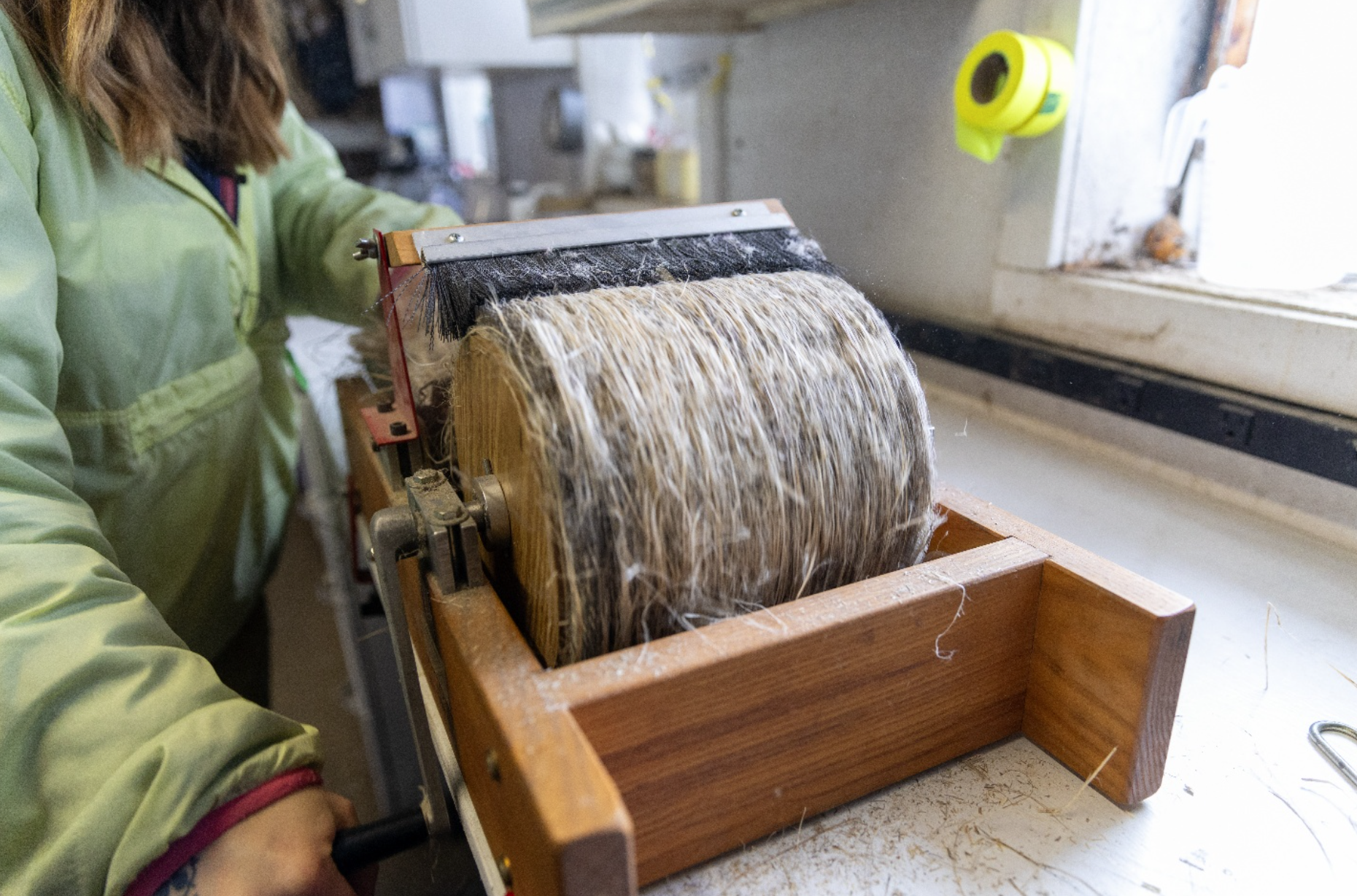
A handcrank carding machine was borrowed from Andrea Myklebust to complete the job. Photo by Andrew Chamberlin
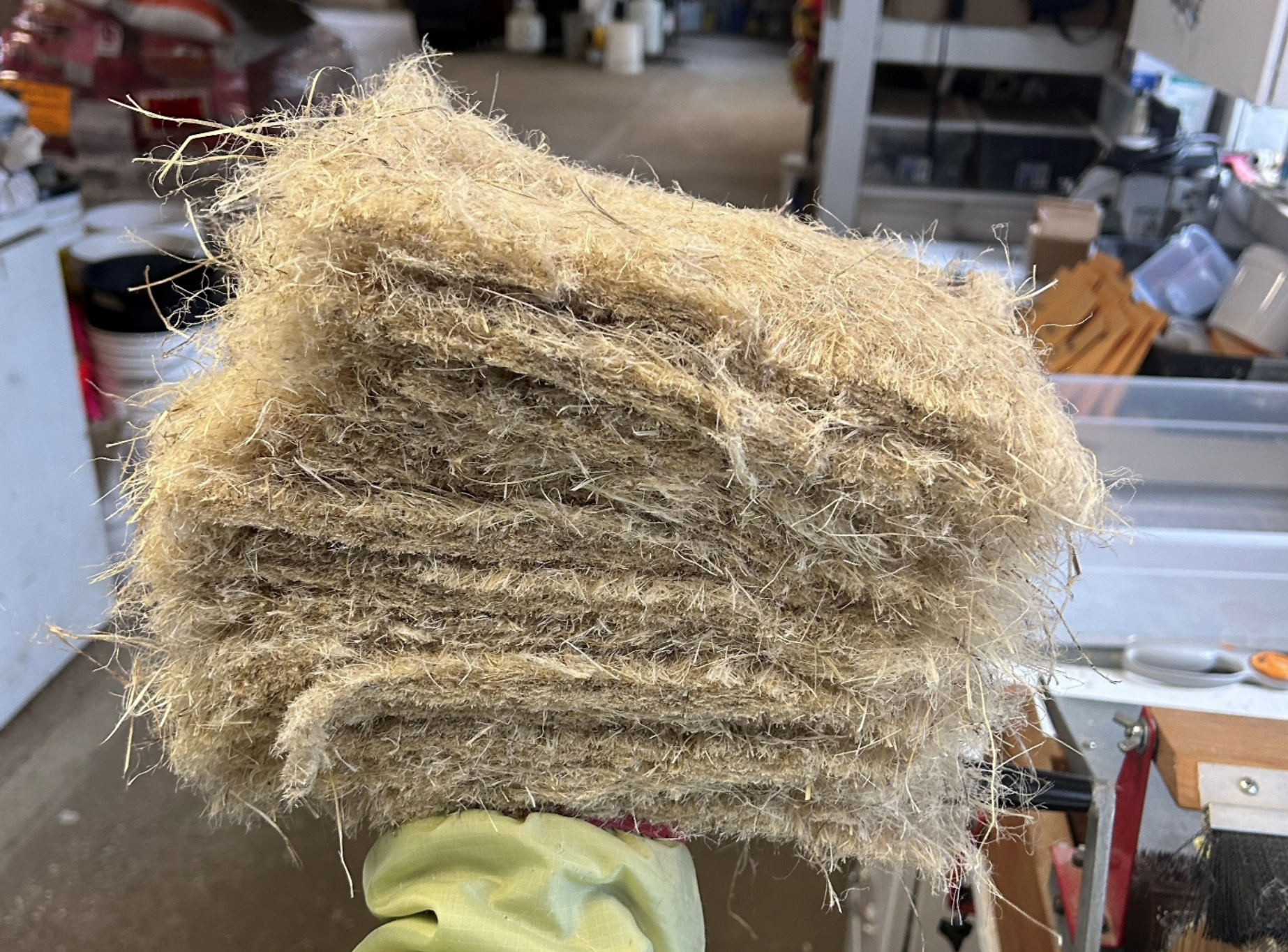
The resulting “woolenized” hemp fiber. Photo by Laura Sullivan
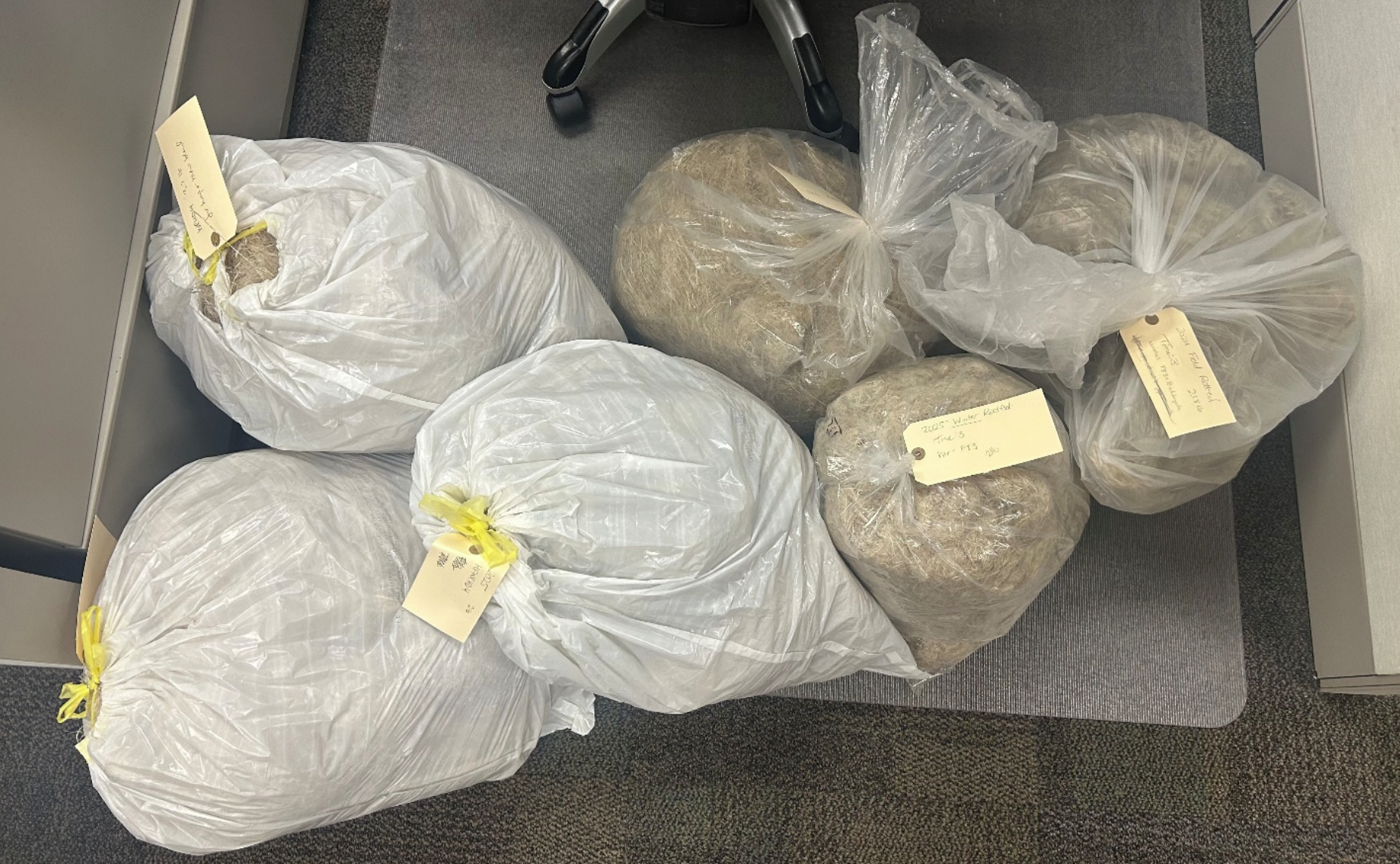
Sixteen pounds of woolenized hemp fiber ready for transport to Battenkill Fibers for blending and spinning. Photo by Laura Sullivan
Our woolenized hemp fiber was then transferred to our partners at Battenkill Fibers for spinning. The spinning trials consisted of six different treatments. Two of the treatments utilized field-retted fiber from our 2024 growing season and the remaining four were comprised of our winter-retted material. Four of the treatments blended our hemp with wool at a ratio of 30% hemp to 70% wool. The other two treatments prototyped alternative ratios of 80:20 (wool:hemp) and 60:40 (wool:hemp). The wool utilized was Corriedale from the Finger lakes region of New York. The resulting yarns represent the first all-local and commercially spun hemp yarns in the modern history of the Northeast, with the entire process, from stalk to spool, occurring within the bounds of Vermont and New York.
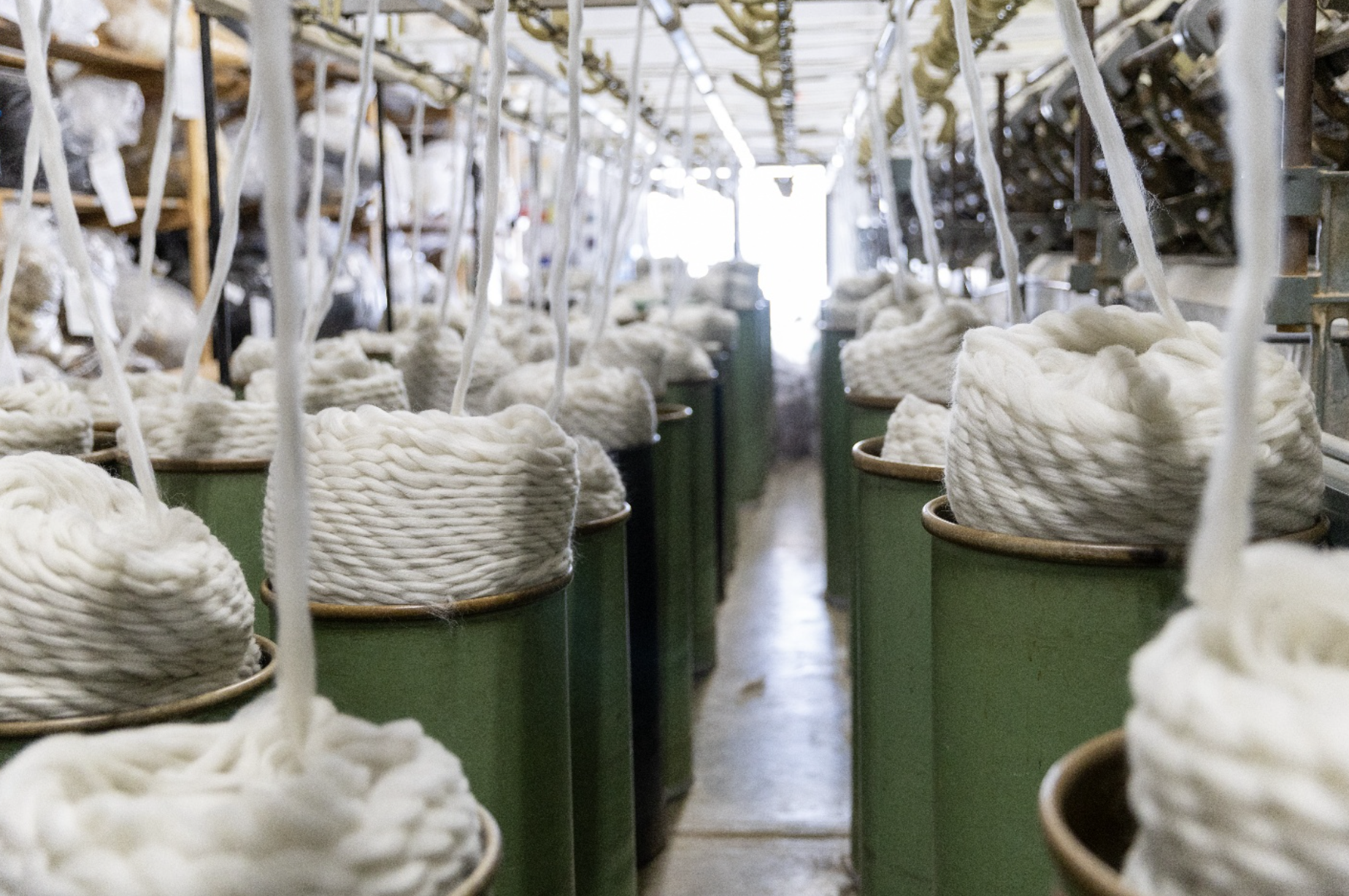
Spinning underway at our partnering mill. Battenkill Fibers in Greenwich, NY. Photo by Andrew Chamberlin
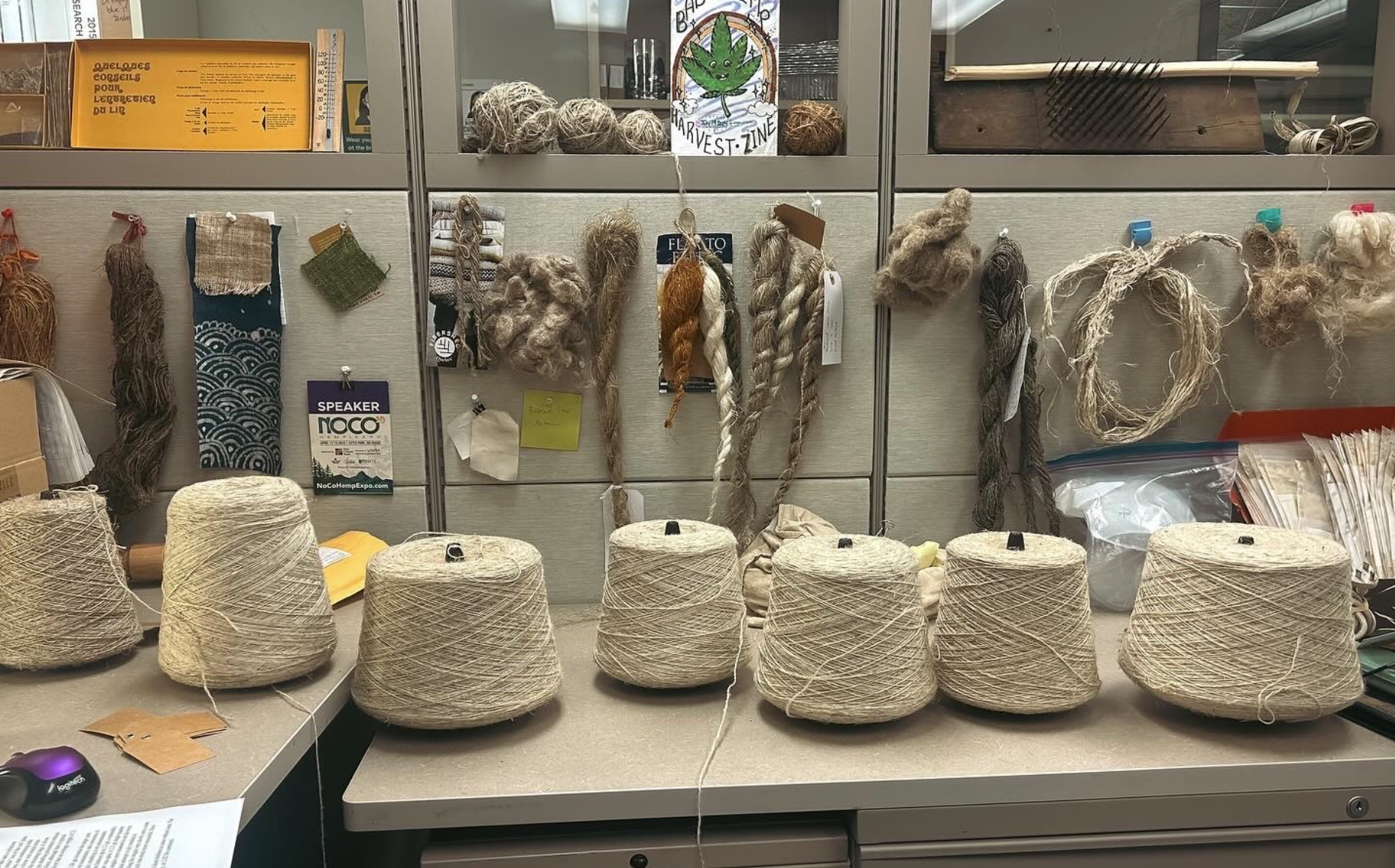
Our six resulting hemp:wool blended yarns spun by Battenkill Fibers with hemp from Vermont and wool from New York. Photo by Laura Sullivan.
Our story could have ended there, but in a highly skilled state like Vermont, we were lucky to be situated within 20 miles of a knitwear designer already familiar with all things local fiber. Muriel’s of Vermont is a mother and son team in the Champlain Islands designing “farm to cable” knitwear on three knitting machines in their North Hero studio. We knew they were perfect for us not only by their close proximity to the farm, but by the hemp:wool sweaters they were already making using similar yarn blends featuring local wool and imported hemp. Everyone was invested in seeing what the local hemp could do. The resulting garments did not disappoint.
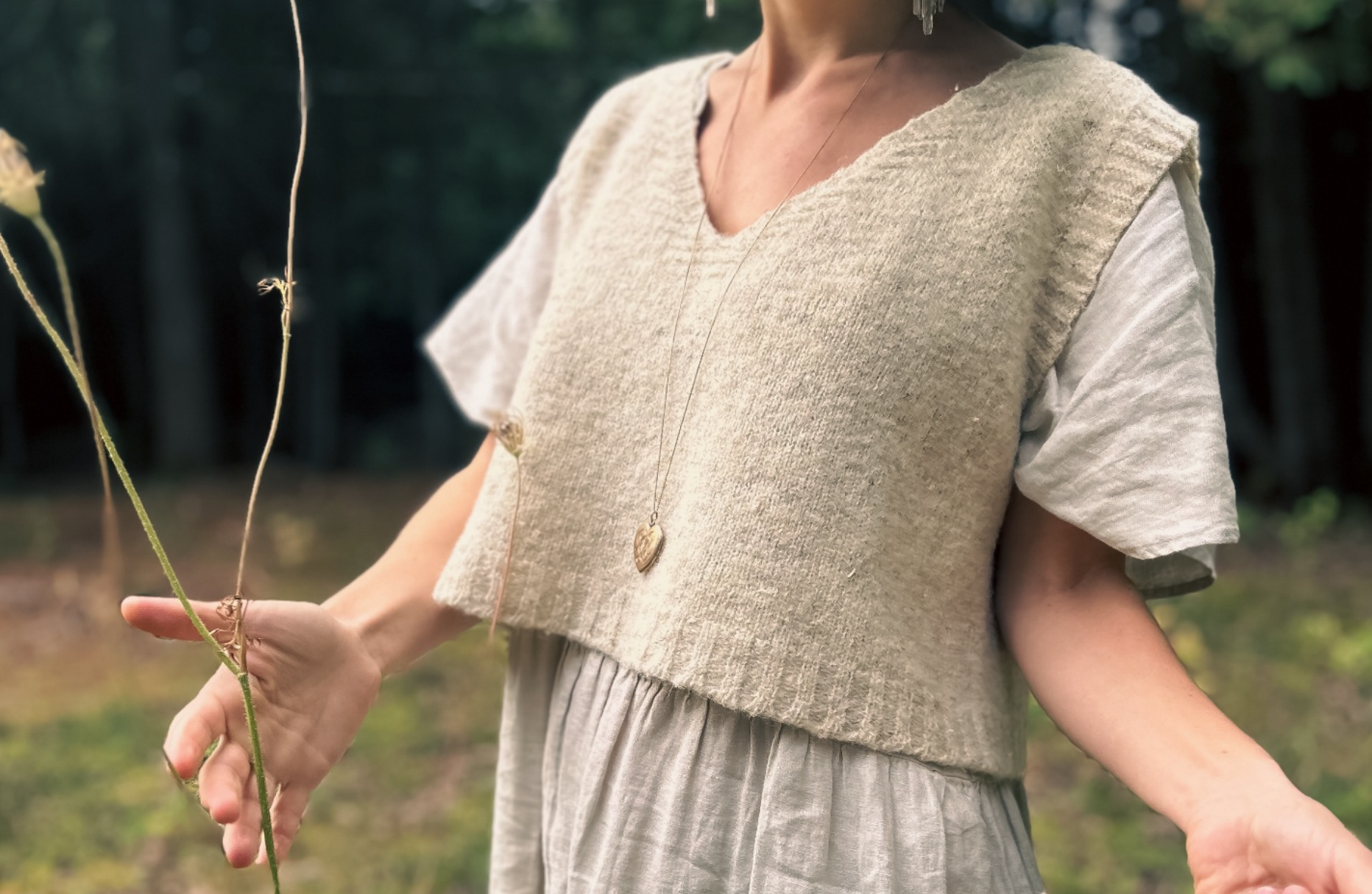
The final garments, knit by mother and son Laura and Cyrus of Muriel’s of Vermont. Model Sara Peterson. Photo by Laura Sullivan
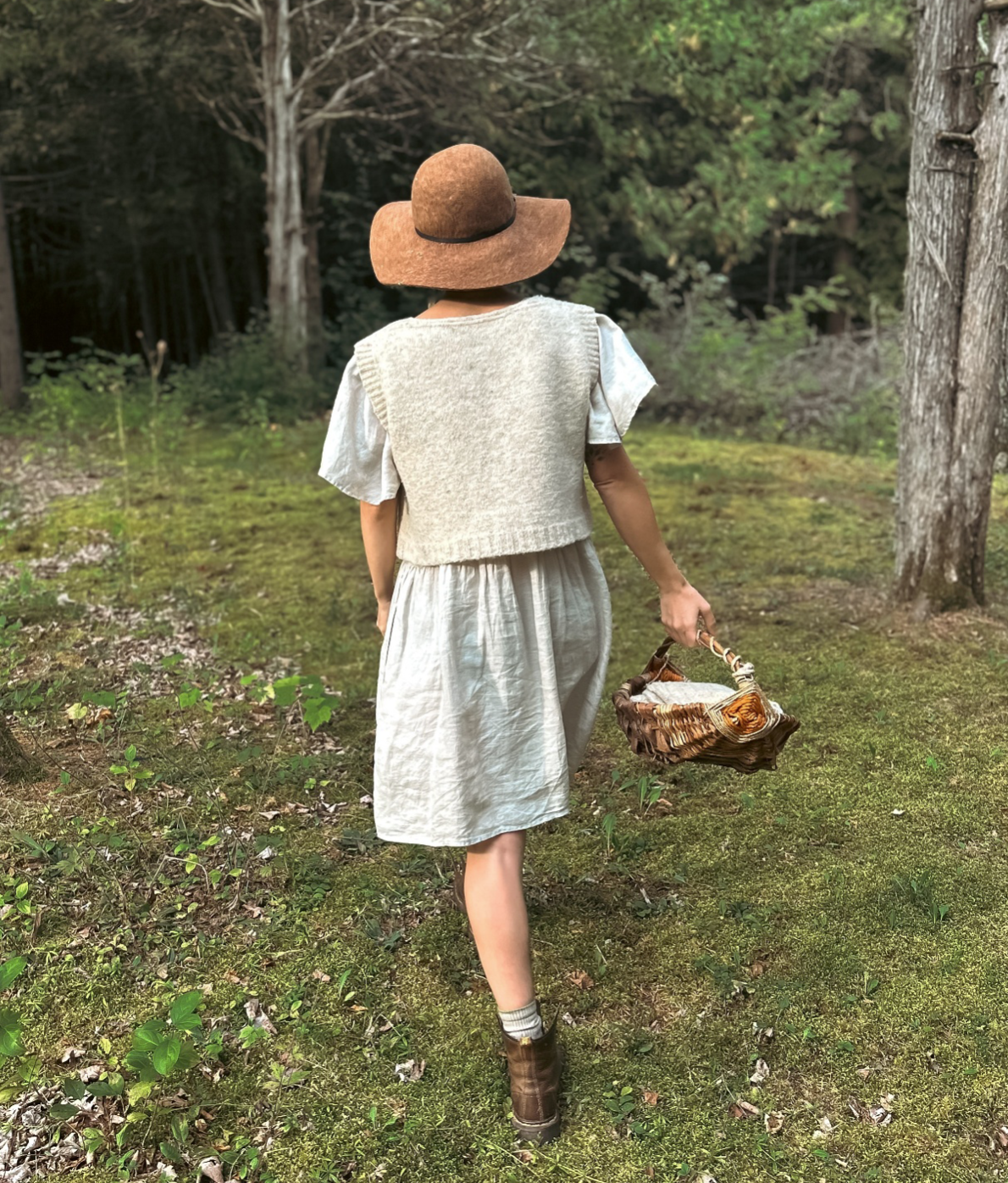
Sweater from the back. Photo by Laura Sullivan.
This work represents a whole new paradigm of possibility for agriculture in Vermont. We are very grateful for the support we received from the Agriculture and Food Research Initiative (AFRI) Critical Agriculture Research and Extension (CARE), project award no. 2023-69008-39277, and The Sun Grant Program, project award no. 2020-38502-32916 (3TD372-PSU) from the U.S. Department of Agriculture’s National Institute of Food and Agriculture. Many additional thanks to Roger Rainville, Travis Driver, Steve Kostell, Chris Callahan, Giovanna Sassi, Andrew Chamberlin, Heather Darby, and the whole Northwest Crops and Soils team for their perseverance in seeing this work through to its completion. If like us, you have now developed an insatiable thirst for Vermont fiber, visit our YouTube page for more behind-the-scenes footage from the project.
